
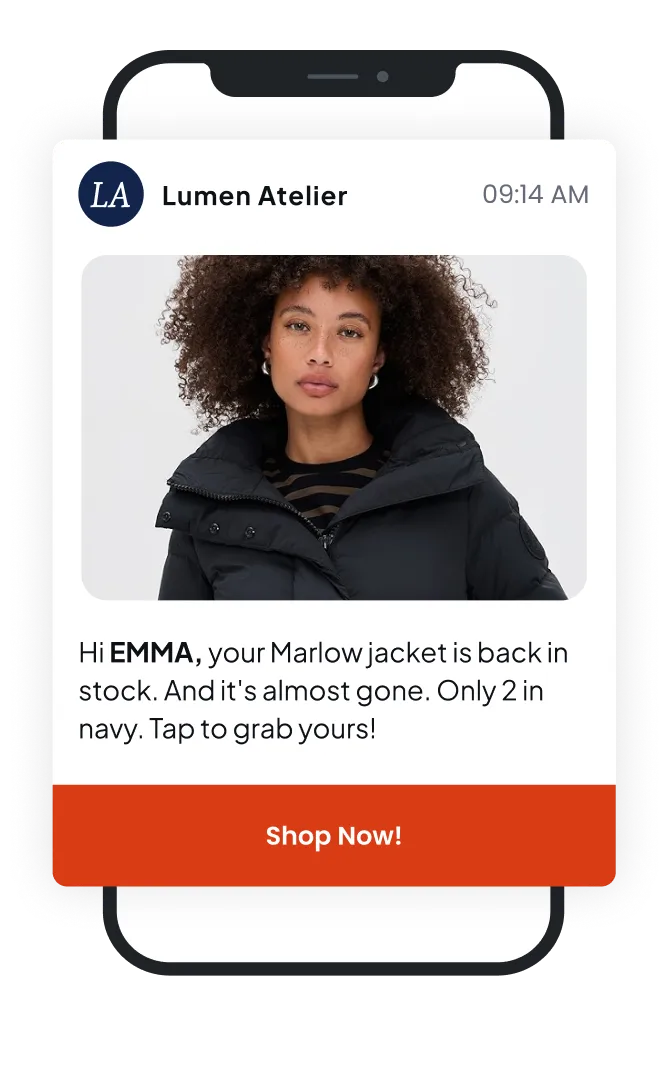
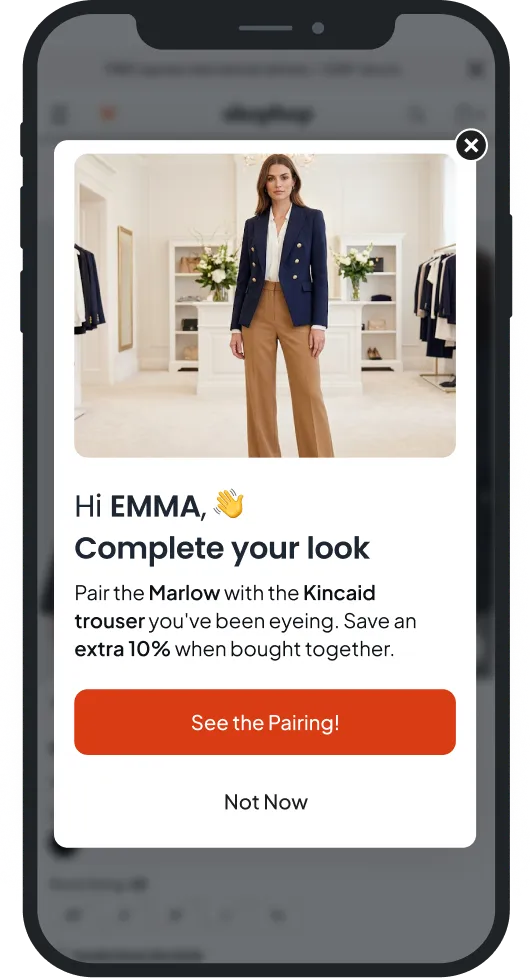
Most brands run push, in-app, and in-line through three different tools, and the user can tell. WebEngage runs all three as one channel.
9.4B
7.3%
Built for Mobile. Backed by the platform.
Set a custom notification sound for your push campaigns, with the default sound as fallback if it's unavailable.
Use Sticky Push to lock a notification on the user's screen so it can't be swiped away. Users must tap an action button to dismiss, ensuring high-priority messages get seen.
Add a live countdown timer to your push notifications to drive urgency. Choose a timer style, set the duration or end time, and customize the color to match your brand.
Create carousel push notifications with up to five swipeable images in landscape or portrait style. Add a CTA label and personalized deep link to each, with optional auto-scroll.
Assign priority levels to your in-app notification campaigns. Set each as Critical, High, Medium, or Low so that when multiple campaigns qualify, the most important one shows first.
Control how in-app campaigns behave per user with lifecycle settings. Define when a cycle ends (on click or views), set active dates, repeat cycles on a schedule, and cap frequency per session.
Measure true campaign impact by holding out users. Choose Universal, Custom, or Campaign-level control groups, then compare held-out users against targeted ones to see the real lift.
Define several conversion events and see how each variation performs against every goal, alongside aggregate conversions and total revenue.
Personalize messages with dynamic fields like name, order ID, and status. Insert placeholders into your template and each recipient sees content tailored to their own data.
Built for Mobile. Backed by the platform.
Mobile Features
Native to this channel
Custom Notification Sounds
Set a custom notification sound for your push campaigns, with the default sound as fallback if it’s unavailable.
Sticky Push
Timer Push Notification
Carousel Push Notification
Create carousel push notifications with up to five swipeable images in landscape or portrait style. Add a CTA label and personalized deep link to each, with optional auto-scroll.
Campaign Priority Setting (In-App)
Mature Lifecycle Support (In-App)
Control how in-app campaigns behave per user with lifecycle settings. Define when a cycle ends (on click or views), set active dates, repeat cycles on a schedule, and cap frequency per session.
Platform Features
Available everywhere, relevant to Mobile too
Multi Level Control Group
Measure true campaign impact by holding out users. Choose Universal, Custom, or Campaign-level control groups, then compare held-out users against targeted ones to see the real lift.
Multiple Conversion Event
Dynamic Personalization
What's new for Mobile teams.
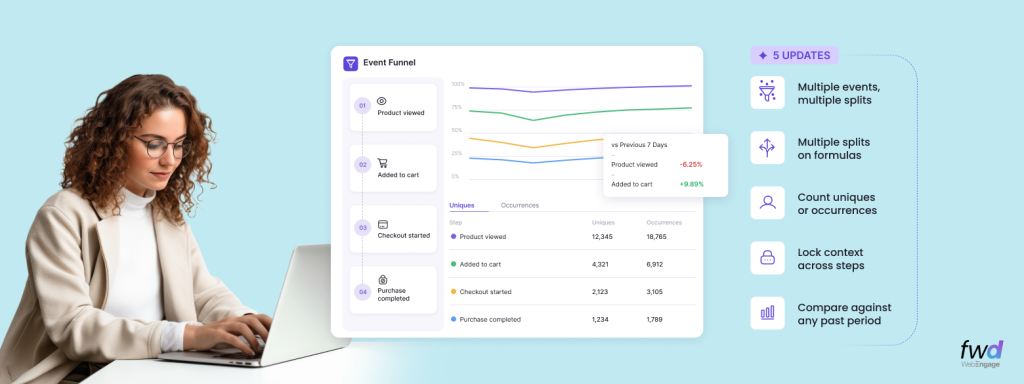
Analytics Digest – Introducing Multi-splits in Event Analytics, Choose Between Uniques/Occurrences In Funnels, Hold Property Constant In Funnels & Compare Funnels Across Time Periods
WebEngage is rapidly becoming the de-facto Analytics toolkit for its customers across product and growth teams. As our usage grows…
WebEngage Is Now Salla Platform Native – Asia’s #1 CEP Joins Hands With GCC’s Largest E-commerce Platform
Salla is one of the largest commerce platforms in the GCC region, built specifically for merchants in the Middle East…
Introducing Entity Relationship Visualizer – Manage Relationships Between Your CDPx Data Objects In A Visual Interface
Last year, we launched a composable version of our Customer Data Platform; CDPx, and introduced Entities – a simple way…
See the anatomy of the other six.
The WebEngage channel atlas
FAQs
Push tokens are tied to the SDK that generated them and are not portable, so tokens from your current tool cannot be exported and reused in WebEngage. Once the WebEngage SDK is integrated, tokens are reacquired as users open the app and the SDK registers a fresh Device Registered event. Plan a parallel run with your current tool until token coverage rebuilds so no user goes dark during cutover.
See docs
Yes, you integrate the WebEngage SDK to send push, since tokens and delivery run through it. For Android you add FCM credentials and for iOS you upload an APNs Auth Key or certificate, then the SDK intercepts token registration automatically. It is a standard app release and can run alongside your existing SDK during the transition.
See docs
Yes. For Android you upload your Firebase (FCM) service account private key, and for iOS you upload either your APNs Auth Key or APNs Push Certificate from your Apple Developer account. The Auth Key method supports multiple apps and does not require annual regeneration.
See docs
Yes. Android supports Text, Banner, Big Picture, Carousel (up to five images), Rating, and Timer layouts, plus fully custom layouts via CustomPushRender. Notifications support up to three action buttons with types like deeplink, call, share, copy, snooze, and track event. iOS supports rich push through the WEServiceExtension and WEContentExtension with predefined button pairs.
See docs
Yes. Silent push delivers a hidden payload to the app without user-facing UI, used to trigger background work such as content downloads. WebEngage also uses a daily silent notification internally to detect app uninstalls.
See docs
The SDK automatically intercepts token registration on both platforms, so refreshed tokens are captured without extra work. Uninstalls are detected by sending a silent notification with an empty payload to all registered devices once a day, and any device that cannot be reached is marked uninstalled. FCM delivery failures due to app deletion also register as uninstalls.
See docs
Yes, and this is the recommended path for push specifically because tokens are not portable. Running both SDKs lets you keep sending from your current tool while the WebEngage SDK reacquires tokens as users open the app, so reach is maintained until coverage rebuilds. Once coverage is sufficient you cut over fully to WebEngage.
See docs